How to clean bathroom grout with baking soda and hydrogen peroxide
Grout is the first thing that gives a bathroom away. Even if the tiles shine, if the lines between them are gray or black, everything looks dirty. And almost always the first impulse is to scrub them with bleach, which smells strong, irritates and, over time, damages the material.
The solution proposed by Clean Without Harm is gentler and, above all, more effective for a simple reason: it's a paste.
Why a paste and not a spray
Grout is porous. Limescale and mold get into those pores, and liquid products run down the wall before they have time to act. A paste stays stuck exactly where you put it and keeps contact for the minutes it needs.
In this formula, the baking soda acts as a mild abrasive that lifts dirt without scratching, the hydrogen peroxide whitens and disinfects, and tea tree essential oil reinforces the action against mold.
Ingredients
- 100 g baking soda
- 30 g 10-volume hydrogen peroxide (about 3%; the cosmetic or pharmacy kind, available at any pharmacy)
- 10 drops of tea tree essential oil
Step by step
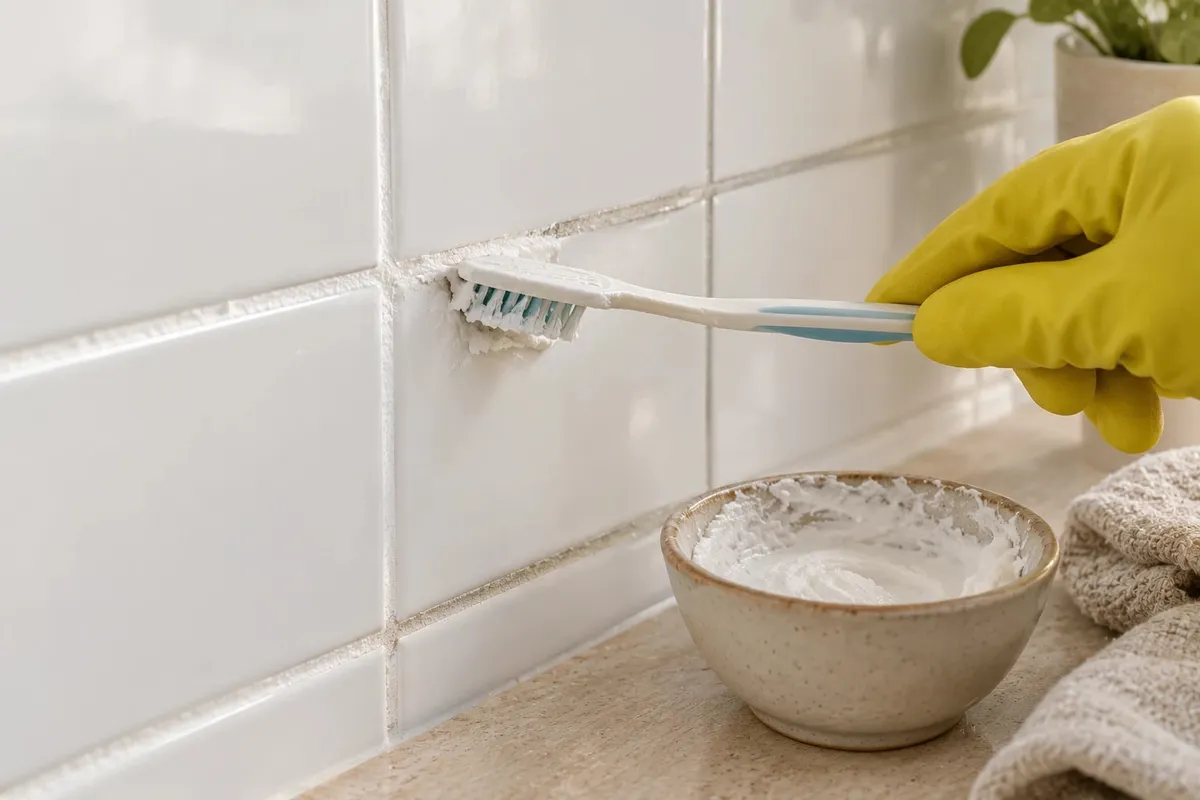
- Mix the baking soda with the hydrogen peroxide until you get a thick paste, with the texture of a dense hand cream.
- Add the essential oil and stir.
- Apply the paste to the grout with an old toothbrush, covering it well.
- Leave it to act for 15 to 20 minutes.
- Scrub with the same brush, following the line of the grout.
- Rinse with water and dry with a cloth.
Prepare the paste right before using it. Don't save it for another day.
Precautions
- Never mix it with vinegar or any acid. Hydrogen peroxide reacts with acids and forms corrosive compounds. If you have just cleaned the bathroom with a vinegar-based product, rinse well before applying the paste. More details in which cleaning products you should never mix.
- Test first in a discreet spot if your grout is colored: hydrogen peroxide can lighten it.
- Wear gloves and ventilate the bathroom while you work.
- Don't use it every day. It is a one-off treatment, for when the grout needs it. Repeated, prolonged contact is not good for it.
What if the mold is very black and deep?
If after two applications the grout is still black, the mold has probably penetrated deeply, especially in the silicone sealant of the shower or bathtub. For those cases, Clean Without Harm includes a specific, more powerful anti-mold formula, which requires more precautions and which the book explains in detail.
How to stop it from turning black again
Mold needs moisture. The gesture that makes the most difference is running a squeegee over the shower screen and the grout after each shower and leaving the bathroom ventilated for a while. With that, the paste becomes maintenance cleaning every few weeks.
More formulas for the bathroom
This paste is one of the formulas in the bathroom chapter of Clean Without Harm, where you will also find the anti-mold for curtains and silicone, a cleaning gel and a disinfectant for faucets and switches.
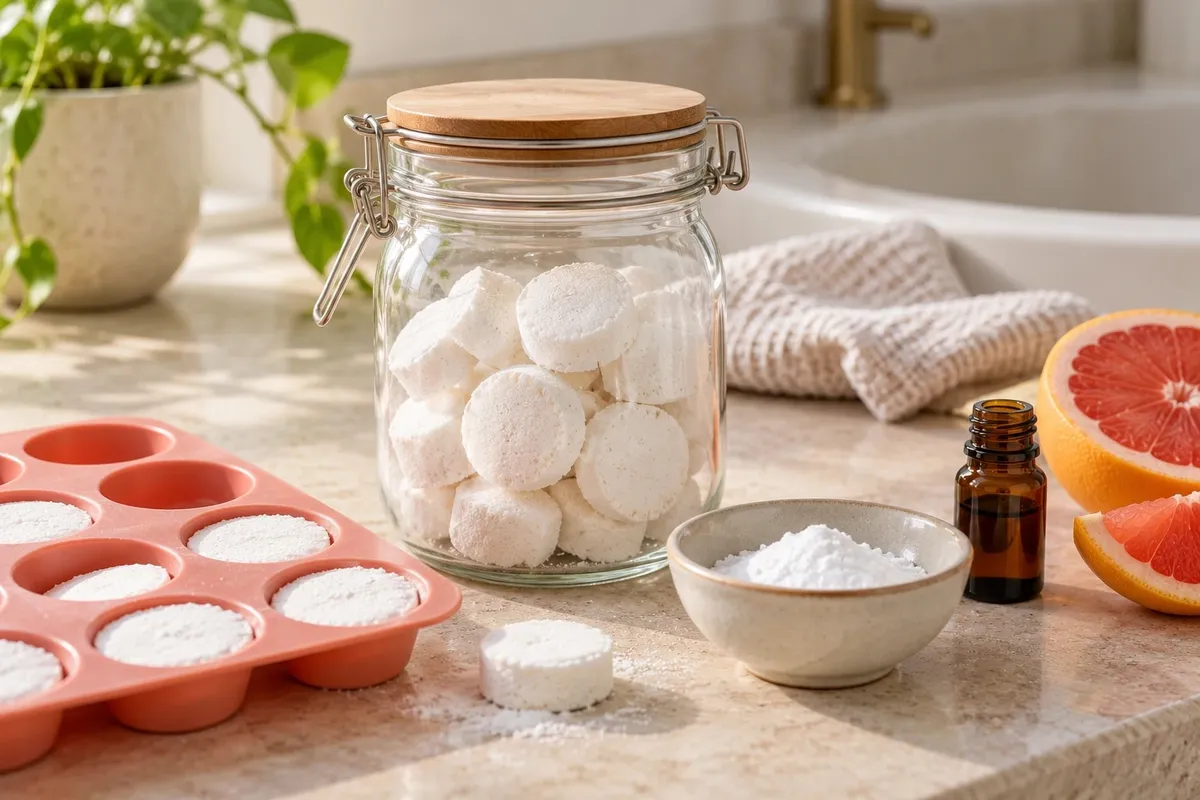
Complete your bathroom cleaning with our homemade fizzy toilet tablets.
 Save