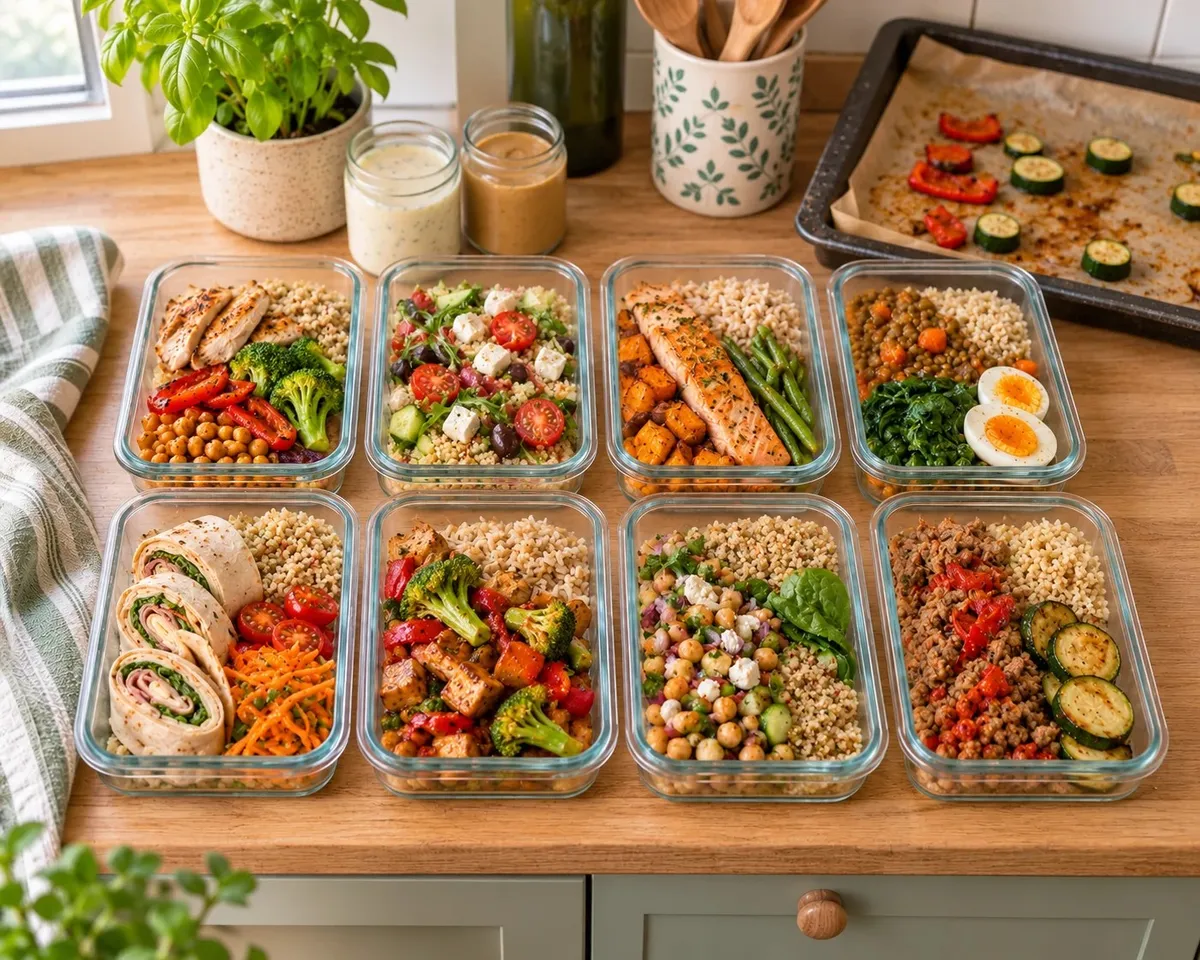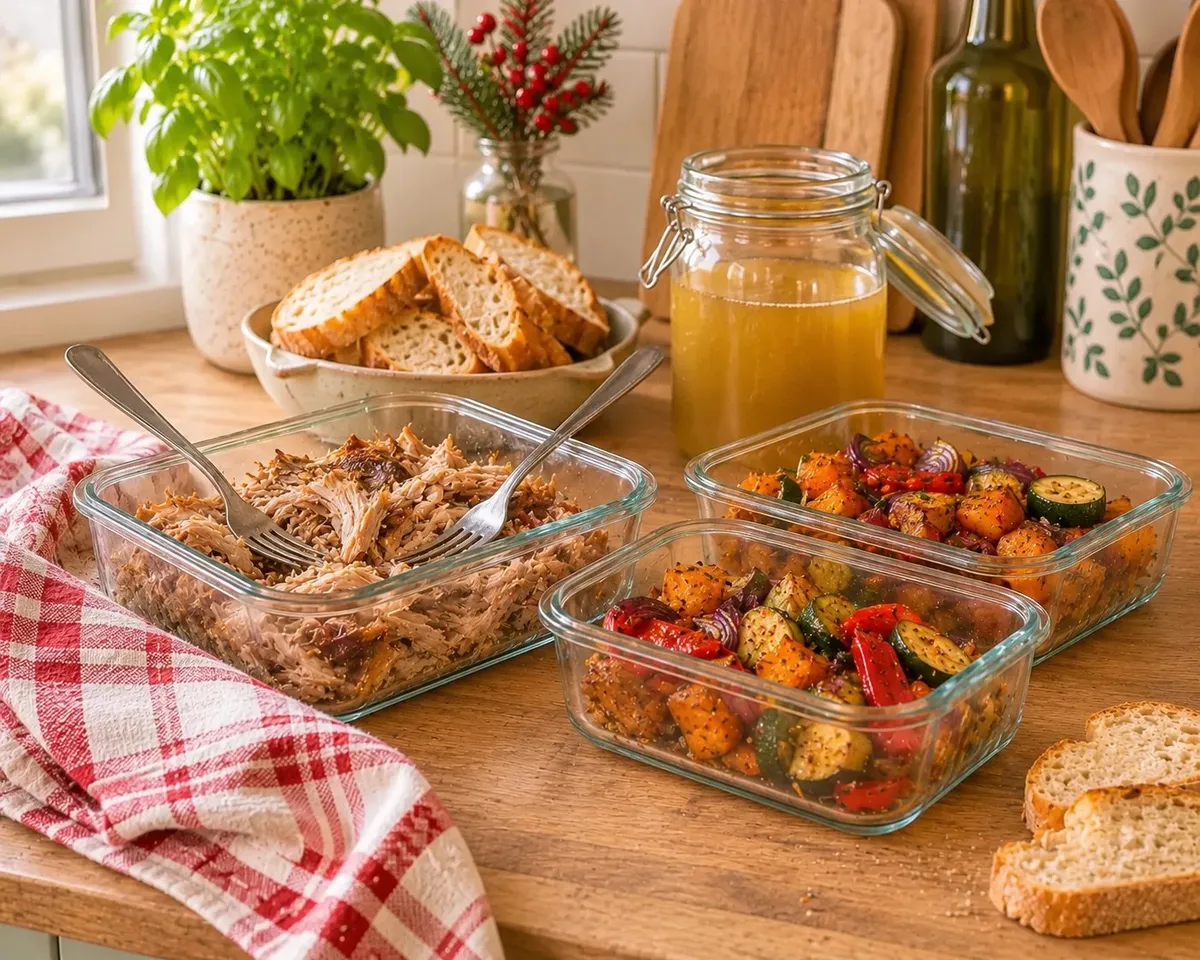
How long does cooked food last in the fridge? The chart for your containers
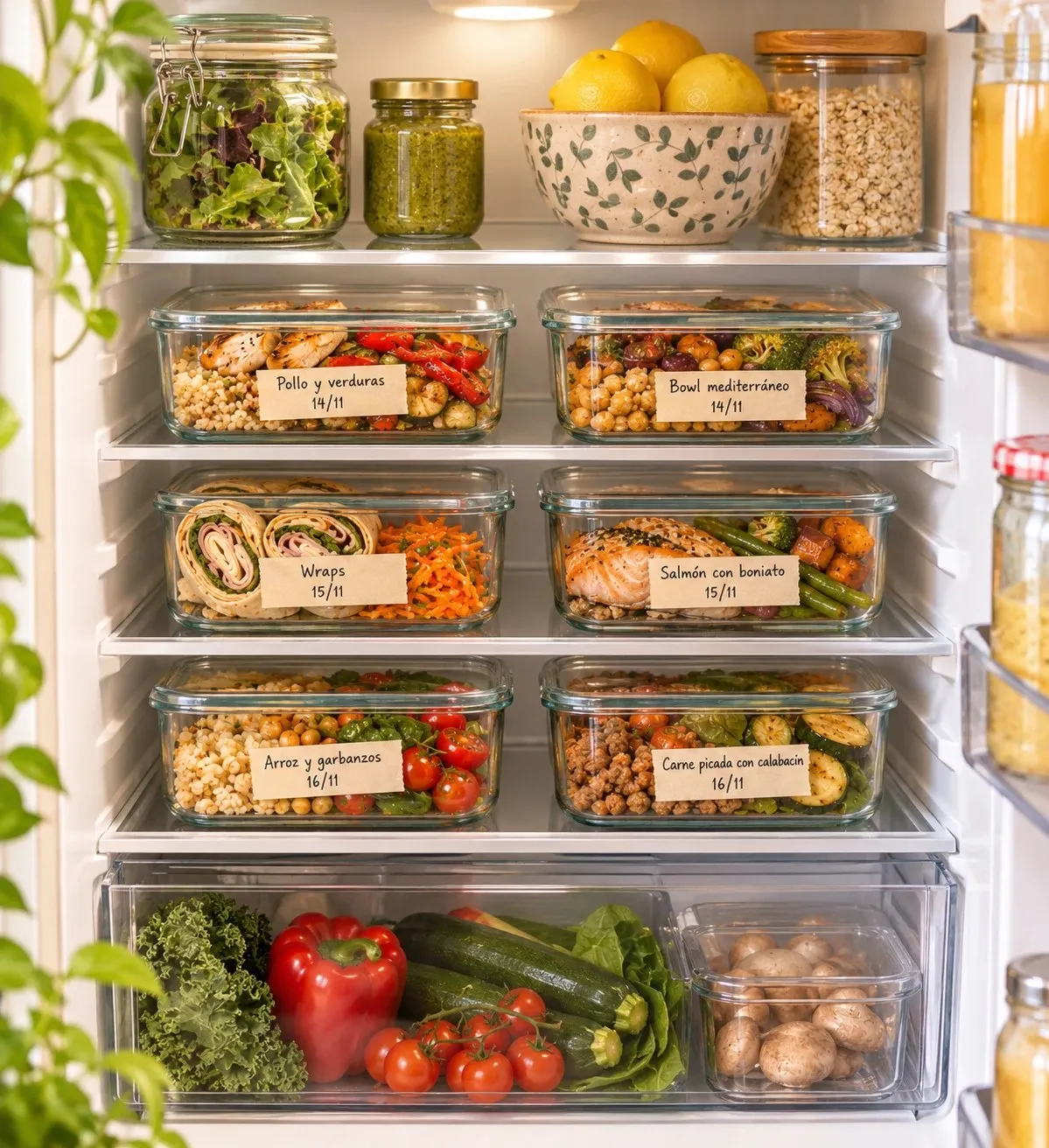
It's Sunday night. At the back of the fridge there's a container of lentils. From Tuesday? From Thursday? You open it, you sniff it, it seems fine… and you eat it with a small doubt.
That doubt has an answer. And knowing it is the difference between making the most of your food and spending a weekend hugging the toilet. This is the chart worth keeping at hand if you cook for several days at a time.
Free download: the container traffic light for your fridge (PDF) ↓
The rule almost nobody knows: smell doesn't count
Before the chart, one important idea: food smelling fine doesn't mean it is fine. Some of the bacteria that cause food poisoning change neither the look nor the smell of the food.
Almost all home food poisoning has the same cause: bacteria multiplying in food that has spent too long at a temperature that suits them. That "danger zone" runs roughly from 40 °F to 140 °F (5 °C to 65 °C). Your kitchen counter is right in the middle. And cold doesn't kill bacteria: it only slows them down. The fridge buys time, but that time has a limit.
How long each thing lasts: the chart
These are the cautious time limits followed by Cut the Apron Strings, based on guidelines from AESAN (the Spanish food safety agency) and EFSA (the European Food Safety Authority). Some sources give more days, but if you cook for the whole week, it's wise to be on the safe side.
| Cooked food | Fridge (40 °F / 5 °C or below) | Freezer (0 °F / -18 °C) |
|---|---|---|
| Cooked rice | 1 day (cool in under 1 hour) | Up to 1 month |
| Cooked fish | 1-2 days | Up to 3 months |
| Cooked or stewed legumes | 2-3 days | Up to 3 months |
| Cooked chicken or meat | 3 days | Up to 3 months |
| Omelets and egg dishes | 2 days | Not recommended |
| Roasted or cooked vegetables | 3-4 days | Up to 3 months (texture changes) |
| Vegetable soups and purées | 3-4 days | Up to 3 months |
| Cooked pasta without sauce | 2-3 days | Not recommended |
| Yogurt-based sauces | 3 days | No |
| Homemade tomato sauce | 4-5 days | Up to 3 months |
| Hard-boiled eggs in the shell | Up to 7 days | No |
| Dressed salad | The same day | No |
How to organize it if you cook for the week
With that chart, the simplest organization is the day-3 rule:
- Days 1 to 3: fridge. What you'll eat in the first three days. Fish and rice on day 1 or 2.
- Days 4 and 5: freezer. Straight in as soon as it cools. On the night of day 3, you move the day-4 food to the fridge.
- Always out: more than 2 hours outside the fridge (1 if it's hotter than 86 °F / 30 °C), past its time limit, odd smell or look… or you simply have doubts.
It's what we call the container traffic light, and you can download it and print it at the end of this article. If you're starting to cook for several days, also take a look at batch cooking for beginners.
Rice: the trickiest food
It's nothing personal: it's a bacterium. Raw rice can carry spores of Bacillus cereus that survive cooking. If cooked rice sits for hours at room temperature, the bacteria grow and produce toxins that don't disappear when you reheat it. No matter how hot you get it.
That's why, with rice:
- Cool it in under an hour, spread on a tray.
- Store it in the fridge and eat it the next day, or freeze individual portions the same day.
- Reheat it only once, until it steams.
Something similar happens with pasta, although it's talked about less: same treatment, cool it quickly and don't stretch the time limits.
The others that need care
- Fish: it's what keeps the least once cooked. Eat it on the first or second day, or freeze it.
- Chicken: always cooked through (165 °F / 75 °C in the center, nothing pink and the juices running clear). And never wash it raw under the tap: it doesn't remove bacteria and splashes them around the sink.
- Egg: omelets and scrambled eggs, two days at most.
- Yogurt or dairy sauces: they last less than oil or tomato ones. Three days and move on.
The seven golden rules
- Two hours outside the fridge at most, one if it's hotter than 86 °F (30 °C). "You have to let it cool completely" is a dangerous myth.
- Cool quickly. Divide into shallow containers (2 inches / 5 cm deep at most). A big pot takes hours to cool inside; five containers, minutes.
- Fridge at or below 40 °F (5 °C). If your fridge has a dial with numbers, don't guess: a fridge thermometer costs very little.
- Raw and cooked, always apart. Raw at the bottom and in a container; cooked on top and covered.
- Reheat thoroughly and only once, until it steams in the center (the reference is 165 °F / 74 °C). Heat only the portion you're going to eat.
- Defrost in the fridge, never on the counter.
- Respect the time limits. When in doubt, throw it out: no serving of lentils is worth a day of fever.
Reheating in the microwave without surprises
The microwave heats unevenly: it can burn your tongue on one bite and leave the center cold on the next.
- Cover the container without closing it completely, so the steam heats everything evenly.
- Add a tablespoon of water to rice, pasta and legumes.
- Stir halfway and heat again.
- Let it rest for a minute: the heat spreads on its own.
- Check the center. If it isn't steaming, another round.
Freezing and defrosting properly
To freeze: do it early (as soon as it cools, not "when I see I'm not going to eat it"), in individual, flat portions, with no air, labeled and dated. A flat bag of lentils freezes and defrosts much faster than a block, and it stacks like a book.
To defrost:
| Method | How | When |
|---|---|---|
| In the fridge | Move the portion from the freezer to the fridge the night before | Whenever you can: it's the safest |
| In the microwave | Defrost setting, and eat right afterward | When you forgot the previous step |
| In cold water | Tightly sealed bag, changing the water every 30 minutes | Flat portions, if you have an hour |
| On the counter | No | Never: the outside enters the danger zone while the center is still frozen |
And one rule worth knowing: raw food that has already been defrosted shouldn't be refrozen. But if you cook it, that cooked dish can go in the freezer.
"Use by" and "best before" are not the same
- Use-by date: it's about safety. Past the date, don't eat it, even if the look and smell seem normal. It appears on highly perishable foods: fresh meat and fish, ready-to-eat salads, fresh cheeses.
- Best-before date: it's about quality. Past the date, the product is usually fine if it has been stored properly and the package is intact, although it may have lost flavor or texture. It appears on rice, pasta, legumes, canned goods or cookies.
According to EFSA, up to 10% of household food waste in the EU is linked to misunderstanding the best-before date. Trick: if something with a use-by date isn't going to get eaten in time, freeze it before it expires.
Free download: the container traffic light
We've prepared the container traffic light: a page to print and stick on the fridge, with the time limits for each food, the day-3 rule and the steps to reheat without surprises. So you never have to wonder again what day that container at the back is from.
Download the container traffic light (PDF) ↓
Frequently asked questions
How long does cooked food last in the fridge?
It depends on the food. As a cautious rule: cooked rice, 1 day; cooked fish, 1-2 days; legumes, 2-3 days; chicken or meat, 3 days; cooked vegetables and soups, 3-4 days; homemade tomato sauce, 4-5 days. Always in a fridge at 40 °F (5 °C) or below, and after cooling the food quickly.
Why is reheated rice dangerous?
Raw rice can carry spores of the bacterium Bacillus cereus, which survive cooking. If cooked rice spends hours at room temperature, the bacteria multiply and produce toxins that don't disappear when you reheat it. That's why you should cool it in under an hour, store it in the fridge and eat it the next day, or freeze it the same day.
How long can food stay out of the fridge?
Two hours at room temperature at most, and only one if it's hotter than 86 °F (30 °C). You shouldn't wait for food to cool completely before storing it: divide it into shallow containers and put it in the fridge.
Can you refreeze defrosted food?
Raw food that has already been defrosted shouldn't be refrozen. But if you cook it after defrosting it, that cooked dish can be frozen.
Going further
Cut the Apron Strings is the batch-cooking book for anyone who has just moved into their first kitchen: 47 recipes that combine into hundreds of containers, 7 weekly menus and everything you need to know to cook once and eat safely all week. And if the holidays are coming up, we tell you how to make the most of what's left over in what to do with Christmas leftovers.
This article offers general food safety guidelines for the general population. If you're pregnant, have a chronic illness or a weakened immune system, consult a health professional: some recommendations may be stricter.