A cheap grocery list for one week (whether you live alone or share an apartment)
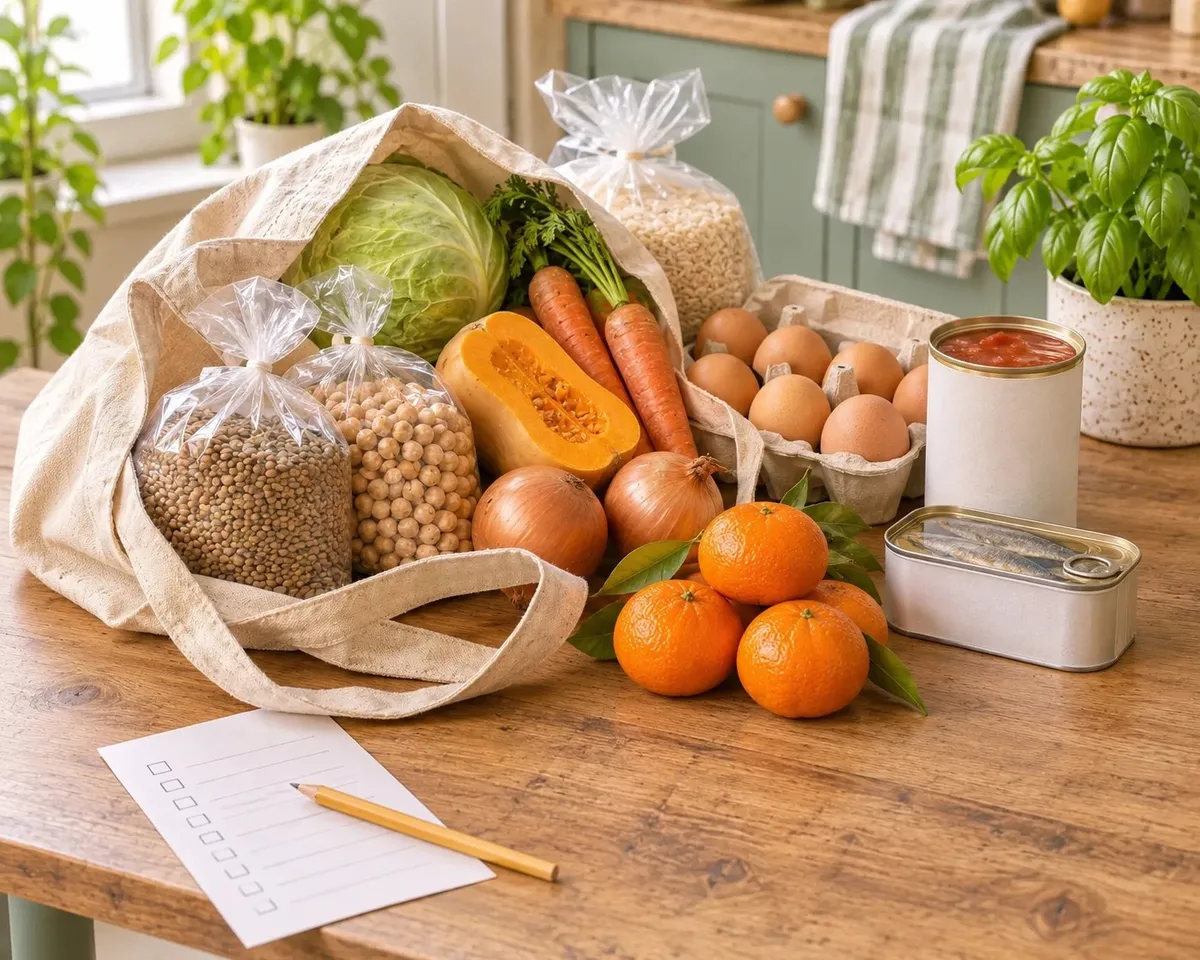
The first month living on your own usually follows the same script. The first week you live off the containers you brought from home, rationed as if they were gold. The second, off pasta with jarred tomato sauce. The third, off frozen food and takeout. At the end of the month you open the banking app and discover that the delivery driver knows your front door better than your friends do.
Eating well on little money doesn't depend on finding miracle deals. It depends on what you buy and how you buy it. This is the list that works, wherever you live.
Free download: the shopping list by section (PDF) ↓
The foods that cut your bill (without lowering quality)
Prices change every year, but these foods have traditionally been among the cheapest in the supermarket and, at the same time, among the most nutritious. Build your week around them:
- Dried and canned legumes: lentils, chickpeas and beans. Protein, fiber and iron at an unbeatable price. The dried ones are even cheaper.
- Eggs: the cheapest and most versatile animal protein.
- Rice, pasta and rolled oats, in big bags and store brand.
- Potato, carrot, onion and cabbage: they last for weeks and work for almost everything.
- Frozen vegetables: spinach, broccoli, green beans and peas, with no waste.
- Small oily fish and canned fish: mackerel, sardines or horse mackerel fresh in season, and cans of sardines, mackerel or tuna.
- Chicken thighs or whole chicken: cheaper per pound than the breast, and juicier.
- Plain yogurt in multipacks and milk: better than sugary dairy desserts.
- Seasonal fruit: apples, oranges, mandarins and bananas are usually the cheapest options for much of the year.
Five rules for shopping on a budget
- Never without a list. And ordered by supermarket section, so you don't wander around or fall for things you don't need.
- Store brand for the basics: cooked legumes, crushed tomatoes, rice, pasta, canned goods, frozen food and plain yogurt. The quality is very similar and the price quite a bit lower.
- Seasonal fruit and vegetables. They're cheaper and tastier. Universal hint: what's piled up cheap at the market is usually what's in season.
- Frozen food is your ally. Just as nutritious, it doesn't spoil and it saves you chopping time.
- Buy protein in family packs and freeze. A big pack of chicken thighs works out cheaper per pound. Divide it into bags and freeze what you won't use this week.
And an anti-waste trick before you leave the house: open the fridge and the pantry. Whatever you already have, cross it off the list. Whatever is about to expire, use it this week.
The basic pantry: you buy it once
With this at home you can always improvise a decent meal. You buy it once and restock when it runs out:
- Dry goods: brown rice, whole-wheat pasta, couscous, rolled oats, red lentils.
- Canned goods: cooked chickpeas, lentils and beans, crushed tomatoes, tuna and sardines, corn.
- Oils and acids: extra virgin olive oil and vinegar.
- Spices: salt, black pepper, sweet and hot paprika, cumin, oregano, garlic powder, curry, cinnamon.
- Sauces: mustard, soy sauce, 100% peanut butter.
- Freezer: spinach, broccoli, peas and a whole-grain sliced bread.
- Fresh foods that keep: eggs, onions, garlic, potatoes, lemons and carrots.
An example: the low-cost week
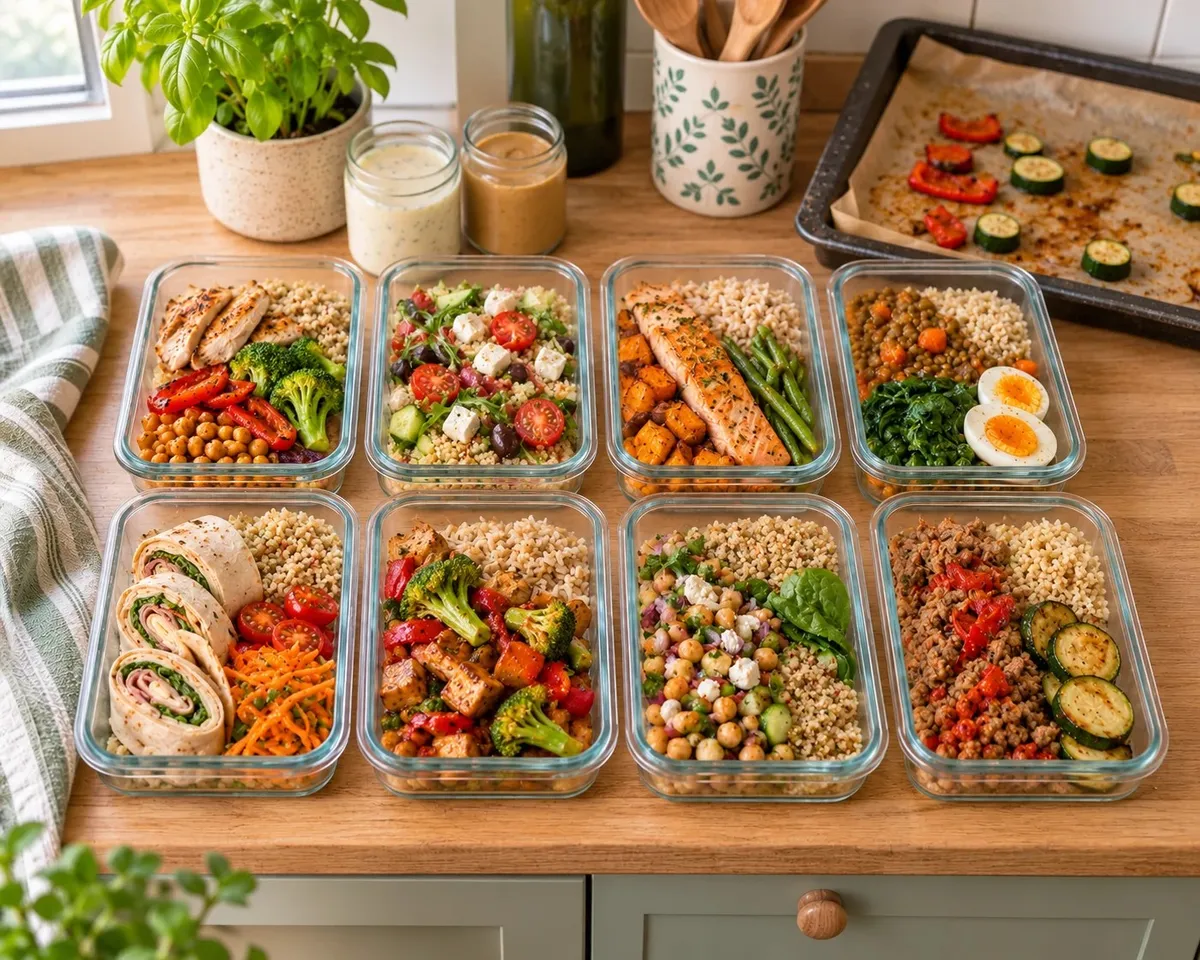
Cut the Apron Strings includes a menu designed precisely to spend as little as possible. It's built with legumes, eggs, seasonal vegetables, frozen food and rice, and cooked in one 90-minute session on Sunday.
What gets cooked: oven-baked crunchy chickpeas, brown rice, sautéed cabbage, pumpkin soup and pisto (a Spanish stew of tomato, peppers and zucchini). During the week, they're rounded out with eggs.
The shopping list:
- Produce: half a cabbage, 2 carrots, 800 g (about 1¾ lb) of pumpkin, 1 leek, 1 potato, 2 onions, 2 peppers, 2 zucchini and cheap seasonal fruit.
- Eggs: a dozen.
- Dry goods: 280 g (10 oz) of brown rice.
- Canned goods: 2 jars of cooked chickpeas, 400 g (14 oz) of crushed tomatoes and 2 cans of sardines.
- Frozen: 1 bag of spinach.
That makes 10 meals, Monday to Friday. A couple of examples: rice with pisto and a fried egg on Monday; pumpkin soup with crunchy chickpeas on top that same night; spinach omelet on Tuesday; a bowl of rice, chickpeas and cabbage with mustard vinaigrette on Wednesday.
If you've never cooked for the whole week, start with batch cooking for beginners: that's where the session timeline is.
If you share an apartment: shop as a team
Sharing a home is the best possible situation for eating cheap: you buy in big sizes, you split the oil, the spices and the basic pantry, and nobody has to buy a jar of cumin just for themselves. Two rules that avoid drama:
- Talk before shopping, not after: what's being cooked, who buys what and how the cost is split. A shared-expenses app or a note in the household group chat is enough.
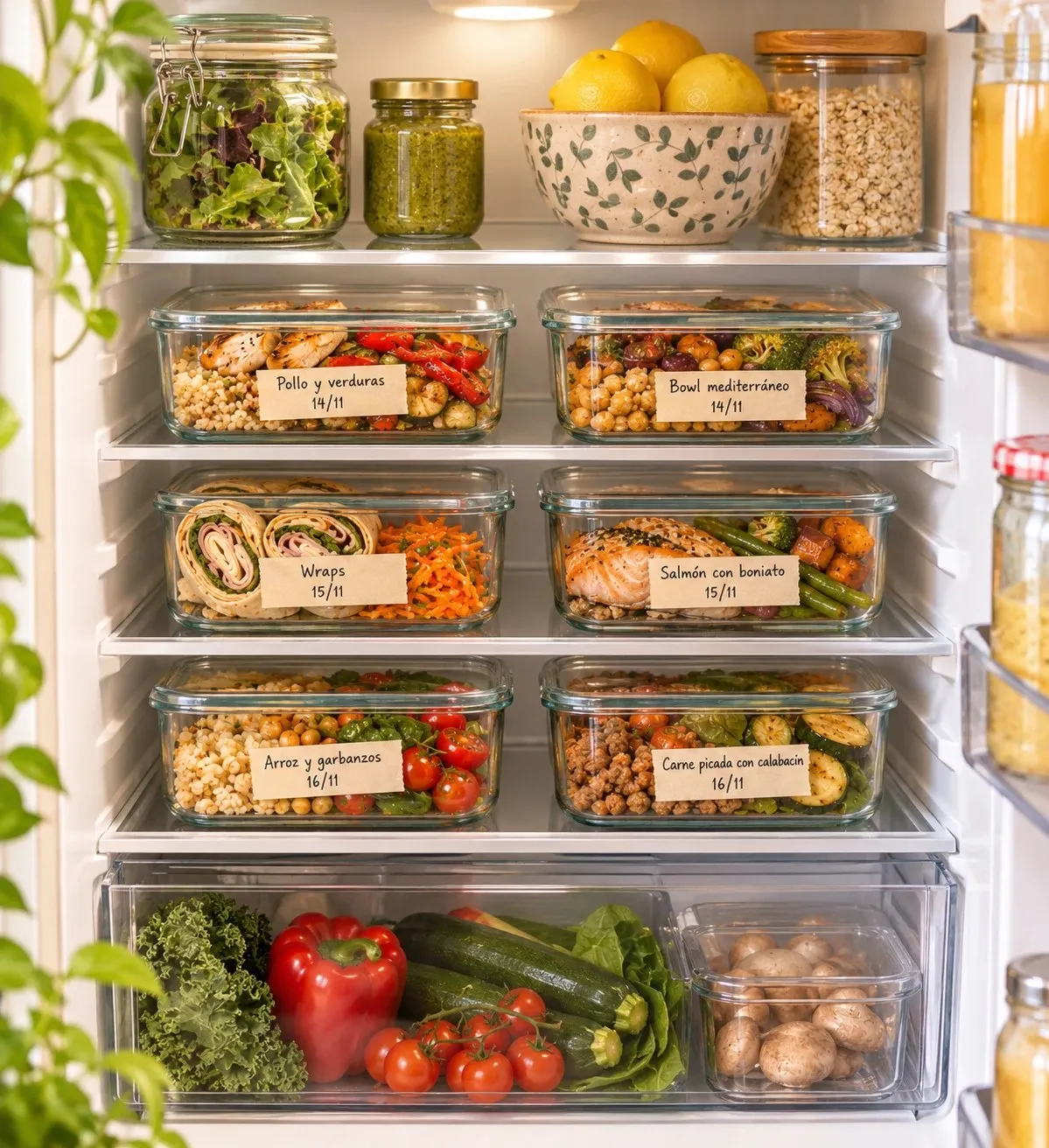
- A common shelf for shared things and individual shelves for each person's own. With a label and a name on every container.
And the Plan B rule
There will be weeks when you don't cook. That's fine: that's what the basic pantry is for. With pasta, tuna, tomato and frozen spinach you have dinner in 15 minutes. Takeout, once a week at most and as a reward, not as a lifeline.
If you want to put numbers on what you save, the 3-bucket system helps you decide how much to put toward groceries each month.
Free download: the shopping list by section
We've prepared a shopping list by section to print or keep on your phone: the foods that cut your bill, the basic pantry to restock and space to note down your weekly menu, in the order you walk through the supermarket.
Download the shopping list by section (PDF) ↓
Frequently asked questions
Which foods are the cheapest and most nutritious?
Legumes (dried or canned), eggs, rice, pasta and oats in large sizes, potatoes, carrots, onions and cabbage, frozen vegetables, small oily fish and canned sardines, mackerel or tuna, chicken thighs and seasonal fruit. Building your week around them cuts your grocery bill a lot.
How do you make a weekly grocery list?
First decide what you're going to cook that week, check the fridge and pantry to cross off what you already have, and write the list ordered by supermarket section: produce, butcher or fish counter, refrigerated, bakery, dry goods, canned goods, frozen and pantry.
Are frozen vegetables just as nutritious?
Yes. Frozen spinach, broccoli, green beans or peas keep their nutrients well, don't spoil in the fridge and save you chopping time. They're among the best allies for eating well on little money.
Is it cheaper to cook than to order takeout?
Much cheaper. A week of meals prepared at home with legumes, eggs, rice and seasonal vegetables costs a fraction of what you spend by ordering food or often buying ready-made meals.
Going further
Cut the Apron Strings, by Gala Montal, is the batch-cooking book for young adults who have just moved into their first kitchen: cook one afternoon a week, eat well and make it to payday. And if you're still running the numbers before leaving home, read how much money do you need to move out?.
This article offers general guidelines for the general population and does not replace the advice of a doctor or a registered dietitian.