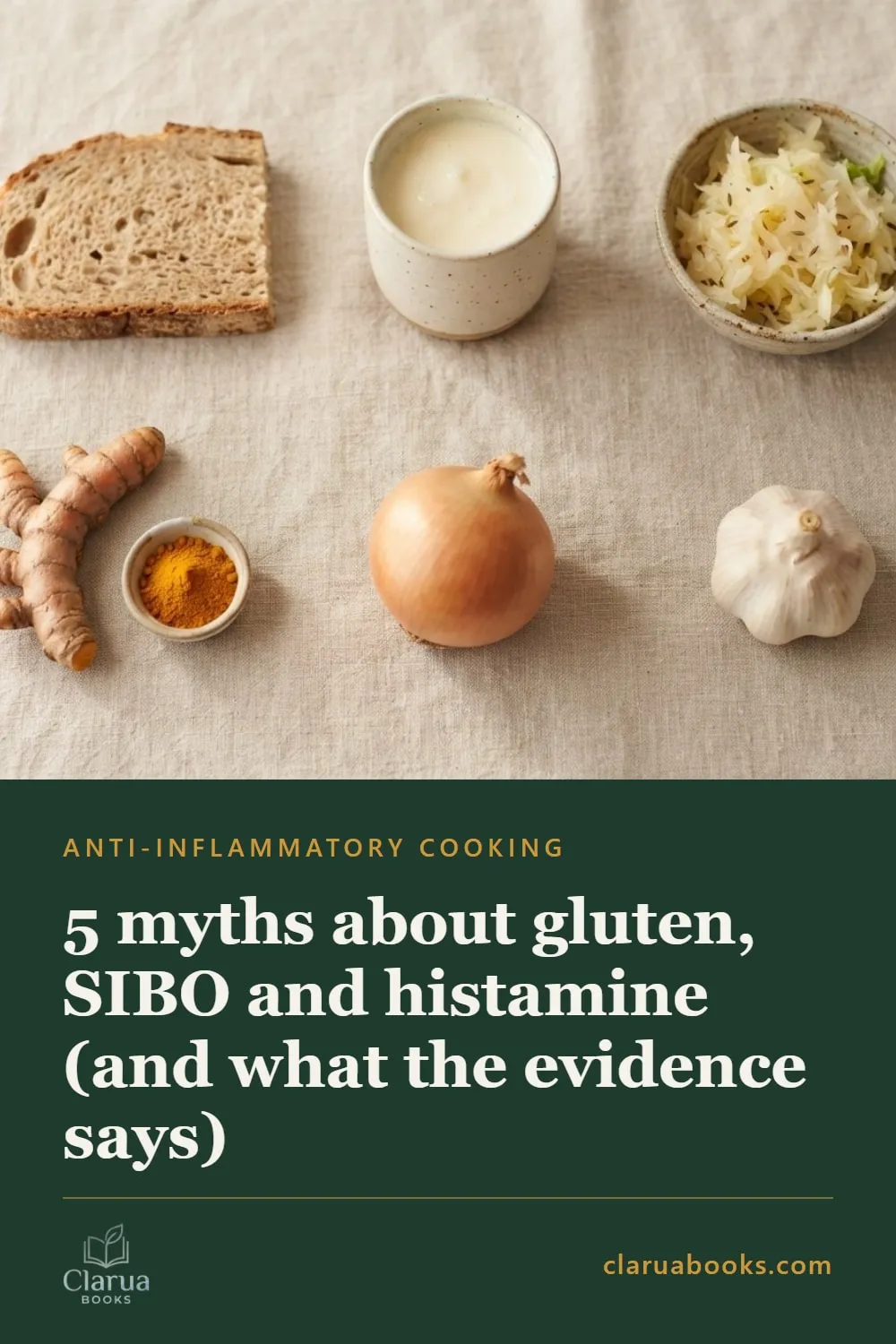
5 myths about gluten, SIBO and histamine (and what the evidence says)
On social media there is no shortage of advice about food and inflammation, and much of it is repeated so often that it ends up seeming true. The problem is that some of it leads to unnecessary restrictions and some of it directly worsens the symptoms people were trying to relieve.
In The Invisible Mosaic, David Lerner devotes a final chapter to separating myths from what the evidence shows about four conditions that often overlap: Hashimoto's, SIBO, histamine intolerance and gluten sensitivity. These are five of the most widespread.
Myth 1: "Gluten is bad for everyone"
Reality: there is no evidence that gluten harms people who don't have celiac disease, wheat allergy or a confirmed sensitivity.
Eliminating gluten without a reason is not harmless: "gluten-free" products tend to be more expensive and sometimes more ultra-processed than their equivalents. If you suspect gluten doesn't agree with you, the prudent thing is to consult before removing it, because to diagnose celiac disease you need to be eating it.
Myth 2: "If I feel better after cutting out gluten, I must have gluten sensitivity"
Reality: not necessarily. When you remove wheat, you also remove fructans, a type of FODMAP that ferments in the gut. Several double-blind studies have observed that, in a good share of people who consider themselves gluten-sensitive, the real trigger is those fructans and not the gluten itself.
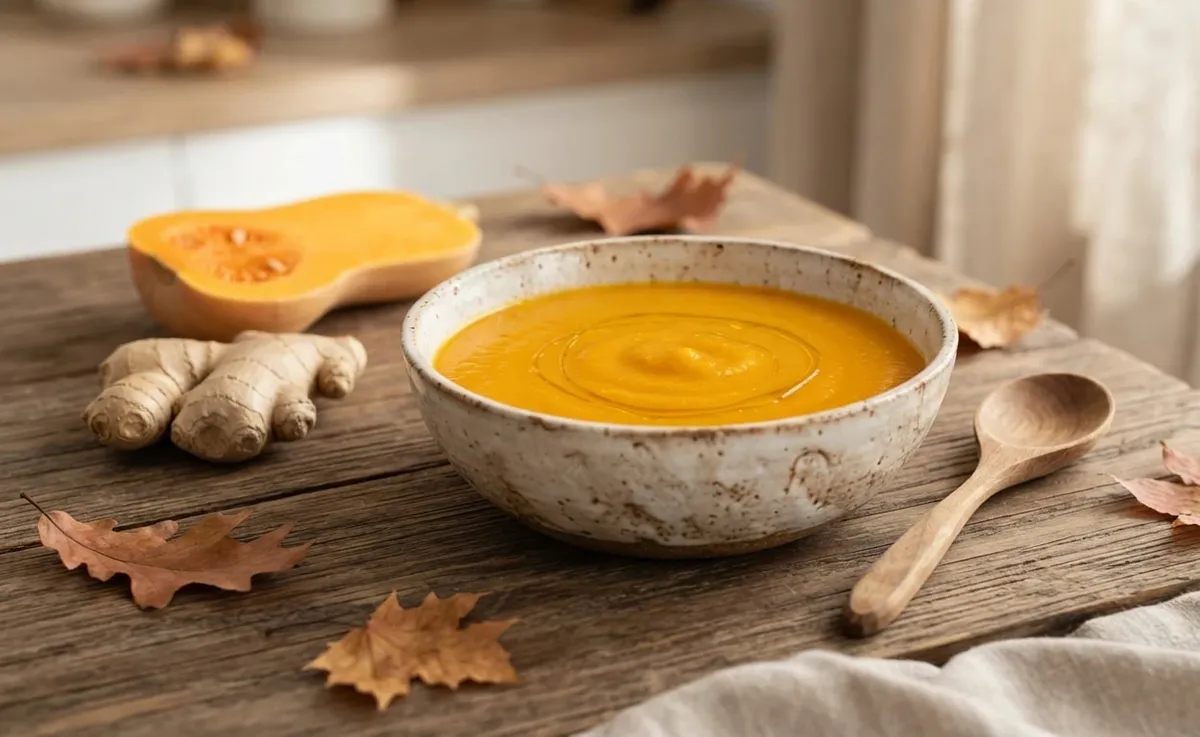
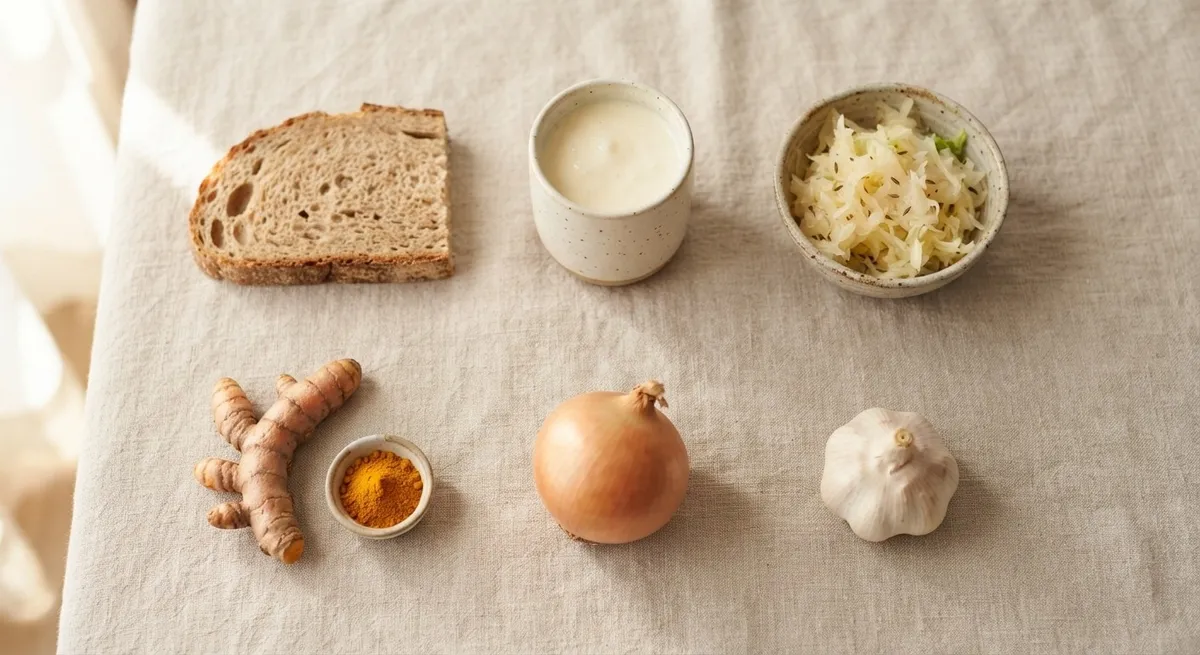
The difference matters: fructans are also in onion, garlic and other foods you may still be eating without knowing they affect you. That is why our recipes, like the pumpkin and ginger soup, leave them out.
Myth 3: "You have to stay on the low-FODMAP diet forever"
Reality: it is a temporary tool. It is designed as a restrictive phase followed by a guided reintroduction of foods to find out which ones you tolerate and in what amount.
Keeping it up indefinitely can be counterproductive: the beneficial bacteria in the gut also feed on those fermentable carbohydrates, and depriving them for a long time can worsen the imbalance of the microbiota that is at the origin of SIBO.
Myth 4: "Fermented foods are good for everyone's gut"
Reality: it depends on the person. Kefir, sauerkraut, kombucha or aged cheeses are highly recommended for the microbiota, but they are among the foods richest in histamine.
If you have histamine intolerance, which occurs when the enzyme that breaks it down (DAO) can't keep up, fermented foods are among the first things you should probably limit. A food that is healthy for most people may not be for you.
Myth 5: "Turmeric cures inflammation"
Reality: curcumin, its active compound, has good scientific backing, but it is poorly absorbed on its own. It needs fat and, preferably, black pepper to be put to use. And even so, its effect is one piece within the whole, not an isolated solution.
What really weighs on background inflammation is the sustained pattern: what you eat almost every day, how you sleep, how much you move and how you manage stress. A meal outside the diet doesn't "ruin" progress either, for the same reason.
The idea that unites the five myths
All five share the same mistake: looking for a single rule that works for everyone. In practice, each person has their own "mosaic" of conditions, tolerances and circumstances, and what works for one may not work for another.
The Invisible Mosaic starts from that idea. It explains what Hashimoto's, SIBO, histamine intolerance and gluten sensitivity have in common, why they often appear together and how to adapt your diet to your specific case, with a 4-week plan, about 30 labeled recipes and an up-to-date bibliography. The book covers other common myths, about leaky gut, exercise or selenium supplements.
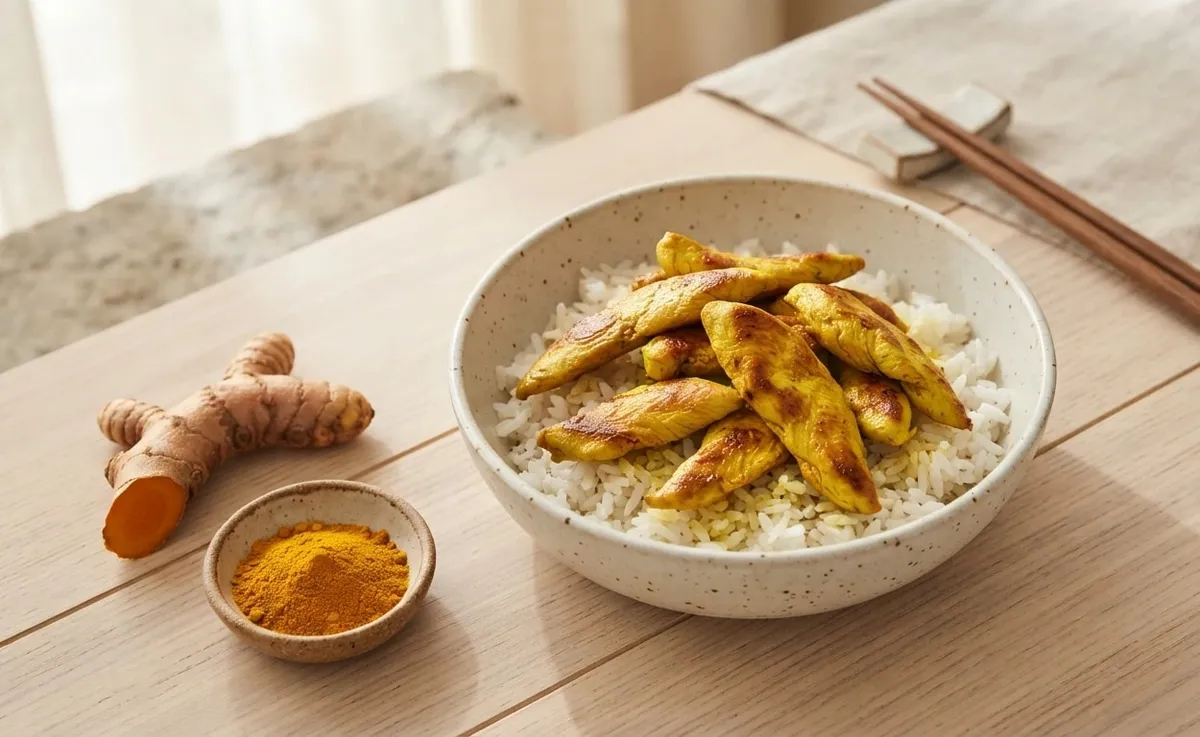
If you want to start in the kitchen, try the rice, chicken, turmeric and ginger bowl.
This article is for informational purposes and does not replace the advice of your doctor or a registered dietitian. Do not change your diet or treatment without consulting first, especially if you have a diagnosis.
 Save