Doubt before you opine: skepticism as an antidote to fanaticism
From the book Talks on a Park Bench, by María Ferrer Tarazona
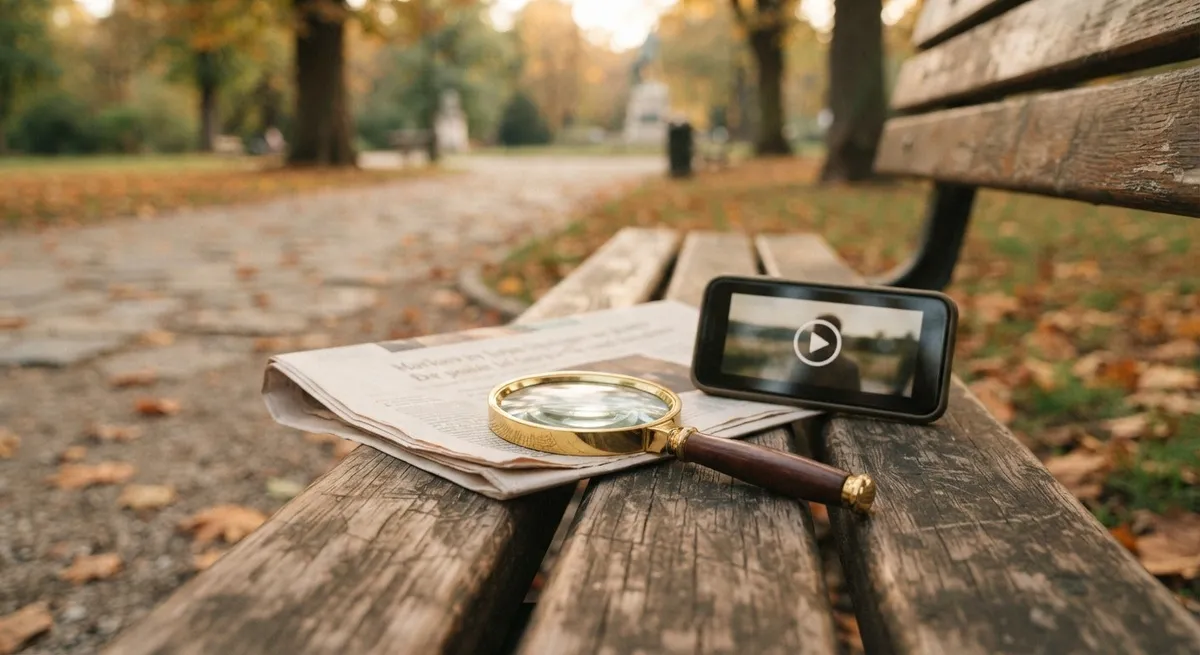
Diego arrives at the bench absolutely furious. He's brought a video that's circulating everywhere: someone, in an interview, saying something that sounds terrible, cut down to fifteen seconds and with an equally outrageous headline on top. Look at this, it's outrageous. Vera, cautiously, asks what nobody wanted to ask: have you seen the whole video, or just this bit?
They look for it. The full sentence is still debatable, but it's much more nuanced than the viral clip. Diego, somewhat embarrassed, admits he was about to share it.
This scene from Talks on a Park Bench raises a very current question: in a world that rewards absolute certainty and immediate reaction, is doubt worth anything? The history of philosophy answers yes, and that well-used doubt is one of the best defenses against fanaticism.
Pyrrho: the first skeptic
Pyrrho of Elis accompanied Alexander the Great's army to India, at the end of the 4th century BC, and came back with an idea that would give its name to a whole school: faced with many of the great questions humanity has debated for centuries, the honest thing is to acknowledge that we have no definitive certainty.
His proposal was the epoché, the suspension of judgment. Faced with questions without a clear resolution, instead of forcing a conclusion in order to feel safe, remain in doubt without anguish. And they observed something surprising: a good part of suffering doesn't come from not knowing, but from the need to always be right. They called the state of calm that followed the suspension of judgment ataraxia, imperturbability.
Careful: the ancient skeptics were not people incapable of acting. They lived their everyday lives guided by the reasonable appearance of things: nobody needs philosophical certainty to cross the street carefully. The suspension of judgment was for the truly difficult questions.
Socrates: knowing that you don't know
Before Pyrrho, Socrates had already made doubt a way of life. According to Plato in the Apology, the oracle of Delphi said that no one was wiser than Socrates. Surprised, he went to talk with politicians, poets and craftsmen who had a reputation for wisdom, and discovered that they believed they knew things they didn't. His conclusion: perhaps his only advantage was being aware of his own ignorance.
From there comes the phrase attributed to him, “I only know that I know nothing.” It's a simplification, but it captures a powerful idea: acknowledging what we don't know is the first step toward learning something.
Montaigne: “What do I know?”
In the 16th century, the French writer Michel de Montaigne revived the ancient skeptics at a time of wars of religion in France, when absolute certainty was paid for in blood. He had a medal struck with his motto: Que sais-je?, “What do I know?”.
In his Essays he observes, with humor and without drama, how varied human customs and opinions are, and how easy it is to take our own for the only reasonable ones. For Montaigne, doubt was not a weakness but a form of tolerance: whoever knows they may be wrong doesn't persecute those who think differently.
Descartes: doubting in order to build
A century later, René Descartes took doubt to the extreme, but with a different goal. In the Discourse on Method (1637) he proposed never accepting anything as true without knowing with evidence that it is, and doubting everything that could be doubted, even if it seemed obvious, until finding something that resisted any doubt.
Descartes didn't want to stay in doubt: he used it as a tool for building solid knowledge. And that is exactly what Diego lacked in front of the clipped video. Applied to today's information, methodical doubt translates into very simple questions:
- Where does this information come from?
- Is it complete or cut down?
- Are there other sources that confirm or contradict it?
- Do I believe it because it has good reasons, or because it fits what I already thought?
You'll find more tools for checking information in the allegory of the cave in the age of disinformation.
Why doubt protects against fanaticism
The Israeli writer Amos Oz, who devoted a short book, How to Cure a Fanatic (in Spanish, Contra el fanatismo), to thinking about this problem, said he had never met a fanatic with a sense of humor. And he pointed to their desire to change others, to save them even if they don't want to be saved, as the fanatic's central trait. His antidote: curiosity, humor and the ability to imagine the other person.
The philosophy of doubt goes in the same direction. Fanaticism, in any ideological direction, always shares some traits:
| Fanaticism… | Well-used doubt… |
|---|---|
| Has absolute certainty of being right | Adjusts its confidence to the reasons it has |
| Sees whoever disagrees as an enemy | Sees whoever disagrees as someone who may know something I don't |
| Can't imagine being wrong | Asks what would make it change its mind |
| Reacts immediately | Takes a moment to check |
| Admits no nuance | Knows that reality is almost always complicated |
Social networks, as the book points out, reward exactly the opposite: the outrageous headline, the fragment without context and unbroken certainty, over verification, which is slower and less viral. That's why doubt today has something of resistance about it.
Present-day psychology has studied this attitude under the name of intellectual humility: the willingness to acknowledge the limits of one's own knowledge and to accept that one may be wrong. People who have it are no less intelligent and don't have fewer opinions: they simply hold them with a confidence proportionate to their reasons, and revise them when better reasons appear.
Careful: doubting is not the same as “anything goes”
Here is the most important part, and the book underlines it with a clear warning: not every question deserves the same suspension of judgment.
- Skepticism examines the evidence and adjusts its confidence to it.
- Denialism rejects well-established facts even when the evidence is solid, and often presents itself as “skepticism” to seem more reasonable.
- Extreme relativism (“everything is up for debate, everyone has their own truth”) uses doubt as an excuse never to commit to anything, not even to the obvious.
Descartes doubted in order to reach certainties, not to stay in doubt forever. And the ancient skeptics reserved the epoché for questions without a clear resolution, not for denying what was in front of them. That the Earth goes around the Sun doesn't deserve suspension of judgment. What a good life is, or what the best way to organize a society is, perhaps does deserve some humility.
The goal, as the chapter sums it up, isn't to doubt everything forever, but to doubt enough, at the right moment, before reacting or sharing something that will later be hard to nuance.
Three skeptical habits for everyday life
Some come directly from the exercises in Talks:
- The verification pause. Before sharing or getting publicly outraged about something you've seen on social media, spend a couple of minutes looking for the complete original source or a second independent source.
- The certainty question. When you catch yourself defending an opinion very forcefully, ask yourself: do I have solid evidence to be this sure, or am I just uncomfortable with the possibility of being wrong?
- One “I don't know” a week. Practice saying out loud, at least once a week, a sincere “I don't know” in response to a question you aren't clear on, instead of improvising an opinion. It's harder than it seems, and more liberating too.
Classroom activity: the certainty thermometer (50 minutes)
For 4th year of ESO (ages 15–16) and Bachillerato (ages 16–18), in Philosophy or Civic and Ethical Values Education.
1. Ten statements (10 minutes). The teacher hands out a list of ten varied statements: scientific facts (“water boils at 100 °C at sea level”), verifiable data, matters of taste (“pineapple pizza is good”), moral questions (“lying is always wrong”) and predictions (“in twenty years there will be no gasoline cars”). None about parties or real people.
2. Individual thermometer (10 minutes). Each student rates from 1 to 10 how sure they are about each statement, and notes what kind of reason they have: evidence, experience, intuition or “it's what people say”.
3. Sharing (20 minutes). On which statements is there the most difference across the class? Does confidence match the quality of the reasons? Which ones deserve Pyrrho's epoché and which don't?
4. Closing (10 minutes). The ten statements are sorted into three columns: doubting would be absurd, doubting is reasonable and doubting is necessary. Final open question: What would make you change your mind about something you defend today at a 10?
Frequently asked questions
What is philosophical skepticism?
It is a current of thought that began in ancient Greece with Pyrrho of Elis. It holds that, on many difficult questions, we have no definitive certainty, and it proposes suspending judgment (epoché) instead of asserting emphatically what we cannot prove. For the ancient skeptics, that suspension led to serenity, or ataraxia.
What is Descartes' methodical doubt?
It is the method René Descartes proposed in the 17th century: doubting everything that can be doubted, even if it seems obvious, until finding something that resists any doubt. He didn't aim to stay in doubt, but to use it as a tool to separate solid knowledge from opinion accepted without examination.
Is being a skeptic the same as being a denialist?
No. Skepticism examines the evidence and adjusts its degree of confidence to it; denialism rejects well-established facts even when the evidence is solid. Disguising the denial of evidence as skepticism is a distortion of this philosophy, not an application of it.
What is intellectual humility?
It is the willingness to acknowledge the limits of what one knows and to accept that one may be wrong. It doesn't mean having no opinions, but holding them with a confidence proportionate to the reasons one has, and being ready to revise them if better reasons appear.
Beyond doubt
In Talks on a Park Bench, Diego is the skeptic of the group, and one of his chapters ends with an idea from Vera that goes beyond the big questions: suspending judgment also about oneself, being able to say “I'm not sure how I feel” without feeling you always have to have a clear answer. Well-used doubt doesn't just make us better citizens; it also takes a weight off our shoulders. To continue, read how to talk about politics without ending up angry.
Are you a teacher? This article is part of the free lesson unit Thinking About Democracy, with six lessons, worksheets and a rubric.
Talks on a Park Bench, by philosophy teacher María Ferrer Tarazona, follows Marc, Nora, Diego and Vera as they stumble, without looking for it, on the same questions philosophers have been asking for more than two thousand years. With practical exercises at the end of each chapter, it's a read meant for young people and also for the classroom.