
What isn't good for the hive: Marcus Aurelius and the idea of the common good
From the book Talks on a Park Bench, by María Ferrer Tarazona
Nora swims in the same event as Carla, her teammate. They train together every day, share a locker room, travel together to competitions and cheer each other on from the edge of the pool. And yet every time Carla improves her time, Nora's first thought is: she's gaining on me.
This scene opens one of the chapters of Talks on a Park Bench. Diego answers with an image from Marcus Aurelius that, two thousand years later, is still one of the best ways to explain a key idea for life in a democracy: the common good.
Marcus Aurelius's beehive
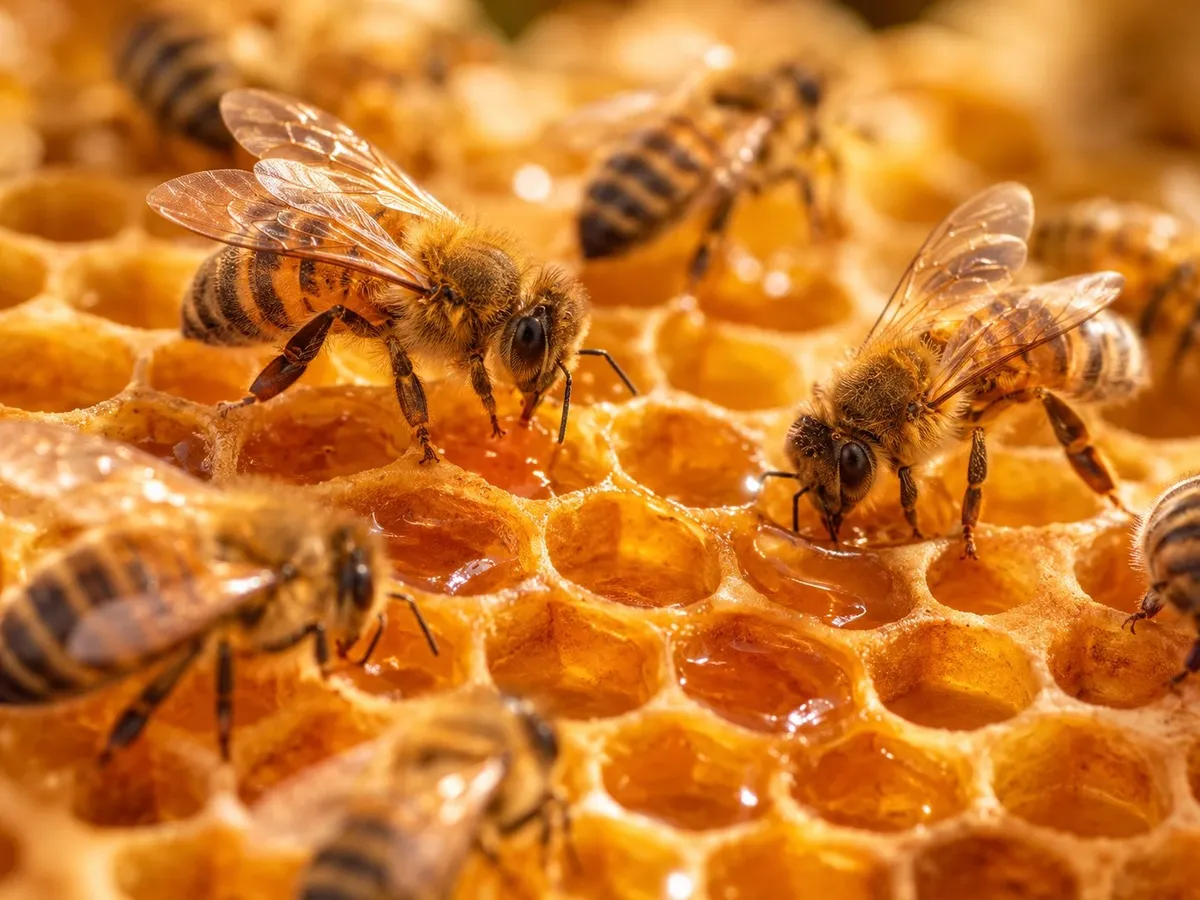
Marcus Aurelius was emperor of Rome in the 2nd century and, at the same time, a Stoic philosopher. In his Meditations, personal notes he never intended to publish, he returns again and again to the same image: what isn't good for the hive isn't good for the bee either.
It isn't just a pretty metaphor. For the Stoics, human beings are not isolated individuals who compete by nature, but parts of a single social organism. Marcus Aurelius says it with another, even stronger image: an arm cut off from the body is no longer really an arm. A person who lives only for their own benefit, with no consideration for the community, cuts themselves off from what gives them meaning.
The emperor knew what he was talking about. He was the most powerful man of his time, and he still understood that no emperor lasts a single day without soldiers, administrators and a people who sustain the empire with their daily work.
Behind this was a philosophical conviction: the Stoics believed in a logos, a universal reason in which all human beings take part. If we all share that spark of reason, we all belong to one human family, beyond borders or social classes. That's why they were among the first in antiquity to defend, though in a way incomplete by our standards, a certain essential equality among all people, slaves included. It is no coincidence that one of the great Stoic teachers, Epictetus, had been a slave.
Before the Stoics: Aristotle and the political animal
The idea goes back further. In his Politics, Aristotle defines the human being as a political animal: a being who can only develop fully by living in community, in the polis. Anyone who could live completely alone, he wrote, would be “a beast or a god”.
For Aristotle, the city doesn't exist only to survive, but to live well. And living well isn't something you achieve alone: it needs fair laws, friendship among citizens, education and participation in common affairs. The good of each person and the good of the city are not rivals, but need each other.
What we mean today by the common good
Today the concept is used to talk about the conditions that allow everyone to live well. Some are material; others, much less visible:
- Shared goods: clean air, water, public spaces, safety.
- Common services: education, healthcare, transport, libraries.
- Invisible goods: trust between strangers, the rules of coexistence, shared culture, one's word given.
The interesting thing is that almost nobody can produce them alone, and almost all of us enjoy them without thinking about them until they fail. Nobody values the trust of being able to leave a bike locked on the street until it gets stolen.
One important clarification: talking about the common good doesn't settle which policies are best. Different people and traditions legitimately disagree about how to look after it: what the state should do, what communities should do, what each person should do, how to balance it with individual freedom. The idea of the common good doesn't close that debate. What it does is remind us that there is something shared worth taking care of, whatever path each person prefers.
The tragedy of the commons
In 1968, the ecologist Garrett Hardin popularized a problem that explains why the common good is so fragile. Imagine a pasture shared by several herders. It suits each of them to add one more sheep: the benefit is theirs alone and the cost is spread among everyone. If everyone thinks the same way, the pasture runs out and everyone loses, even though each person acted rationally.
It happens with fishing, water, the climate, silence in an apartment building or the cleanliness of a shared kitchen.
For years it was thought that there were only two ways out: an authority controlling everything or dividing it into private property. But the economist Elinor Ostrom, the first woman to receive the Nobel Prize in Economics (2009), studied real communities around the world that had been managing forests, irrigation systems or fisheries for centuries without exhausting them. Her conclusion was that people can take care of what is common when they organize: with clear rules, decided by those who follow them, with mutual monitoring and ways to resolve conflicts. Marcus Aurelius's hive isn't a utopia: it's something that gets built.
The trap of going it alone
Let's go back to Nora. Her problem isn't competing: in a competition there are limited places, and the book acknowledges that frankly. The problem is having started to live every achievement of someone else as a defeat of her own.
It's a logic that surrounds us: a classmate's grade, another person's followers, the recognition someone else receives that we feel “takes away from us”. It seems motivating, but it usually generates more anxiety than drive, because there will always be someone who seems to be doing better.
On the bench, Marc supplies the key from his experience as a violinist: playing alone and getting it perfect is fine; playing with others and having it come out well among all of you is something else. Nora recognizes it in her team's relays. And in the end she reaches a conclusion: if Carla is doing well, it's also a little bit to the credit of both of them.
The book also warns against the opposite extreme: the hive doesn't cancel out the bee. Wanting to win, striving to stand out and feeling proud of your own achievements is not at odds with caring for the “we”. Marcus Aurelius demanded enormous discipline of himself and made hard decisions alone, without ever ceasing to think about the common good.
Three exercises to practice it
These are some of the exercises that close the chapter:
- The hidden “we”. When you feel envy at the success of someone close to you, ask yourself: do we belong to the same “we”? What would change if I added their success to mine instead of subtracting it?
- Celebrate out loud. For a week, when someone close to you achieves something you also wanted, tell them out loud with a sincere sentence of recognition.
- Shared credit. Think of an achievement that feels completely yours and make a list of all the people who made it possible. It doesn't take away from the merit of your effort: it puts it in its place.
Classroom activity: hive dilemmas (50 minutes)
For 4th year of ESO (ages 15–16) and Bachillerato (ages 16–18), in Philosophy or Civic and Ethical Values Education.
1. The sentence (10 minutes). Write on the board: “What isn't good for the hive isn't good for the bee either.” Do you agree? Always? First impressions are collected without debating yet.
2. The pasture game (15 minutes). Groups of five. Each group shares a “meadow” with 20 tokens that regenerate by 25% per round if at least 10 are left. In each round, each student secretly decides how many tokens to take. After three rounds without talking, three more are played allowing them to agree on rules. What changes?
3. Dilemmas (20 minutes). In groups, each one debates a case and presents arguments for and against:
- In a group project, one person does nothing and everyone gets the same grade. What is fair?
- A neighbor wants to play loud music at home on Saturday nights. Where does her freedom end?
- Cheating on an exam doesn't directly harm anyone. Or does it?
4. Closing (5 minutes). Open question: What “hives” are there in your life and what do you do for them?
Frequently asked questions
What is the common good?
It is the set of conditions that allow all members of a community to live well: from shared goods such as clean air, safety or education, to mutual trust and the rules of coexistence. It is not the sum of everyone's interests, but what makes it possible for each person to pursue their own.
What does Marcus Aurelius mean by the beehive?
In his Meditations he writes that what is not good for the hive is not good for the bee either. With that image he expresses a central Stoic idea: human beings are by nature part of a community, and our individual good is bound up with the good of all.
What does it mean that human beings are political animals?
It is an idea from Aristotle, in his Politics: a human being can only develop fully by living in an organized community, the polis. Anyone who could live completely alone, he said, would be a beast or a god.
What is the tragedy of the commons?
It is a situation in which each person, acting rationally according to their own interest, depletes a shared resource, so that in the end everyone loses. The term was popularized by the ecologist Garrett Hardin in 1968, and the economist Elinor Ostrom later showed that many communities manage to avoid it by organizing themselves.
Beyond the hive
Marcus Aurelius's image is completed by that of a lesser-known Stoic, Hierocles, who drew our obligations as concentric circles running from oneself to all of humanity. We cover it, with an activity included, in Hierocles' circles. And if you're interested in how all this is put into action, the philosopher Hannah Arendt has a lot to say: she appears in the chapter “The Power of Acting Together”.
Are you a teacher? This article is part of the free lesson unit Thinking About Democracy, with six lessons, worksheets and a rubric.
Talks on a Park Bench, by philosophy teacher María Ferrer Tarazona, follows Marc, Nora, Diego and Vera as they stumble, without looking for it, on the same questions philosophers have been asking for more than two thousand years. With practical exercises at the end of each chapter, it's a read meant for young people and also for the classroom.